The Inside Track: Por qué la visibilidad en tiempo real se ha convertido en una misión crítica en LATAM
March 23, 2026
June 11, 2026
x min read
Si su empresa mueve mercancías a través de América Latina, ya sabe que esta región le exige más. Pone a prueba su logística, sus finanzas, su postura de seguridad y su paciencia, a veces todo antes del mediodía y, a veces, todo al mismo tiempo.
Mi nombre es Jose Suarez, director de ventas de Tive para LATAM. Crecí en México y he pasado años trabajando en esta región con empresas que envían de todo, desde carne de res y piñas hasta maquinaria pesada. Me he sentado frente a directores ejecutivos, responsables de compras y directores de seguridad, y no dejo de escuchar lo mismo una y otra vez: necesitamos ver qué está pasando, y necesitamos verlo ahora.
Una situación que nunca olvidaré ocurrió en Costa Rica. Estaba reuniéndome con la directora ejecutiva de un importante productor de piña cuando recibió una llamada de un abogado. Se habían encontrado 32 kilos de cocaína dentro de uno de sus contenedores que se dirigía a España. Un problema de transporte marítimo acababa de convertirse en una crisis legal, financiera y de reputación a la vez.
Historias como esa solo rayan la superficie de por qué la visibilidad en tiempo real se ha convertido en una prioridad para toda la empresa en LATAM. Por eso, quiero compartir con ustedes algunas ideas y experiencias de primera mano sobre lo que estoy viendo sobre el terreno y hacia dónde se dirige la oportunidad.
LATAM no es un mercado único: trátelo de esa manera y perderá oportunidades
Una de las cosas que más aprecio de América Latina es lo distinto que es realmente cada mercado. México no es Colombia. Colombia no es Chile. Chile no es Perú. Costa Rica no es Brasil. Cada país aporta su propia infraestructura, entorno regulatorio, expectativas de los clientes y argumentos comerciales para una visibilidad en tiempo real.
Es por eso que un enfoque único para todos no es válido en este caso. Cada uno de los equipos con los que he trabajado en México, Costa Rica, Colombia, Perú, Chile, Argentina y otros países me ha enseñado algo diferente sobre lo que significa el éxito en su mercado y lo que significa realmente el ingenio. Conocer a cada país donde se encuentra, en lugar de aplicar un único manual regional, es lo que convierte una buena estrategia en un impacto real.
Desde fuera, lo único que se ve es la fricción. Apaguen las noticias, cierren las redes sociales y quédense donde estoy. Verás la complejidad, claro. Pero también verá empresas ávidas, perspicaces y listas para competir a nivel mundial.
Es por eso que copiar y pegar una estrategia de visibilidad de EE. UU. o EMEA siempre será un fracaso. La visibilidad en tiempo real en Latinoamérica tiene que reflejar lo que realmente ocurre sobre el terreno: país por país, ruta por ruta.
En LATAM, la ubicación sigue siendo la primera pregunta
Entonces, ¿qué aspecto tiene la visibilidad en tiempo real cuando trabajas país por país? Todo comienza con la pregunta más básica: ¿dónde está mi envío en este momento?
Five rastrea la temperatura, la humedad, los golpes, la luz, las cercas geográficas y la inteligencia de rutas. Todo esto importa. Sin embargo, en toda Latinoamérica, la ubicación es casi siempre lo primero que preguntan los clientes, no porque un envío se retrase, sino porque la ubicación es la primera señal de riesgo.
Algunos clientes me han dicho que si un camión se detiene durante unos minutos cerca de un puerto o se desvía aunque sea un poco de su ruta prevista, su equipo se pone al teléfono de inmediato. No esperan. No asumen que todo está bien. Porque esa parada puede ser el momento en que un contenedor se abre, manipula o desvía por completo.
¿Los equipos se preocupan por la temperatura y el estado del producto durante productos perecederos, farmacéutica, y bienes de alto valor? Absolutamente. Pero nada de eso importa si no sabes dónde está el envío.
El mayor riesgo no siempre es lo que se roba: es lo que se añade
Tengo que volver a la historia de la cocaína en Costa Rica porque capta exactamente por qué el rastreo de la ubicación es tan importante en LATAM. Ese director ejecutivo no perdió un contenedor por robo de carga—alguien puso 32 kilos de cocaína dentro de su contenedor y, sin más, su empresa figuraba en todos los documentos de embarque y un abogado ya estaba hablando por teléfono.
La gente escucha «delito de carga» e inmediatamente piensa en «robo». Bastante justo. El robo es un verdadero problema, y no lo estoy minimizando. Pero la amenaza de la que más me hablan los ejecutivos de la región es la contaminación. Drogas, dinero en efectivo, contrabando, lo que sea: se carga en los cargamentos sin que nadie lo sepa.
El robo te cuesta mucho. La contaminación puede costarle el nombre y la reputación de su empresa.
Imagínese lo que pasa si no se detecta ese camión lleno de cocaína: aterriza en otro país con narcóticos en su interior. Las autoridades lo decomisan. Los investigadores comienzan a trabajar al revés en cada entrega: el cargador, el transportista, el almacén, el puerto. Su empresa es el centro de todo esto hasta que pueda demostrar lo contrario, y es difícil hacerlo rápidamente.
La visibilidad en tiempo real es lo que le da esa prueba. Una alerta luminosa indica que la puerta de un contenedor se abrió cuando no debería haberlo hecho. Desviaciones de ruta y paradas no autorizadas se marcan en el momento en que ocurren. El historial de ubicaciones punto por punto brinda a los investigadores y abogados algo concreto con lo que trabajar.
Cuando todo está en juego, ese tipo de evidencia puede salvar todo su negocio.
Más allá de la seguridad, todos los departamentos también quieren participar
La seguridad es el punto de partida obvio para la conversación sobre la visibilidad, especialmente después de todo lo que acabo de analizar. Sin embargo, las empresas más inteligentes con las que trabajo descubrieron algo importante: una vez que se cuenta con la visibilidad en tiempo real, todos los equipos del edificio encuentran una razón para usarla.
- Finanzas: La visibilidad en tiempo real ayuda a los equipos a dejar de tratar el transporte como un coste fijo y a empezar a ver exactamente dónde los retrasos, el deterioro, la repetición de trabajos y la incertidumbre sobre las reclamaciones están mermando discretamente el margen.
- Ventas: Es posible que sus clientes nunca soliciten un seguimiento en tiempo real panel de control, pero sienten perfectamente la diferencia entre una cadena de suministro que los sorprende y otra que los mantiene informados, antes de que los problemas lleguen a su escritorio.
- Calidad: Los datos de temperatura, humedad, luz y choques permiten a los equipos de productos detectar los problemas de integridad durante el transporte, antes de que los productos dañados lleguen al mercado y generen costosas devoluciones.
- Adquisiciones y operaciones: La visibilidad finalmente responde a las preguntas que estos equipos se han estado haciendo durante años: ¿qué portaaviones funcionan mejor? ¿Qué carriles causan más interrupciones? ¿Dónde sigues perdiendo tiempo?
Siempre les digo a los clientes de Latinoamérica que la aceptación interna se fortalece dramáticamente una vez que la conversación va más allá de la seguridad. Contabilidad, compras, calidad, operaciones y liderazgo: todos necesitan ver cómo la calidad de los datos afecta a sus funciones específicas. Una vez que ven el impacto, todos tienen algo en juego. Todos obtienen valor.
Lo que aprende sobre el terreno cambia su forma de pensar sobre el riesgo
Ya he contado la historia de la cocaína dos veces, así que le daré un descanso. Pero está lejos de ser la única experiencia que me queda. He trabajado con empresas que envían de todo, desde fruta hasta metales pesados y caramelos, y cada una me ha enseñado algo diferente sobre dónde visibilidad de los envíos en tiempo real importa en Latinoamérica, y por qué.
No hay nada mejor que ver las cadenas de suministro de cerca.
Piñas en Costa Rica
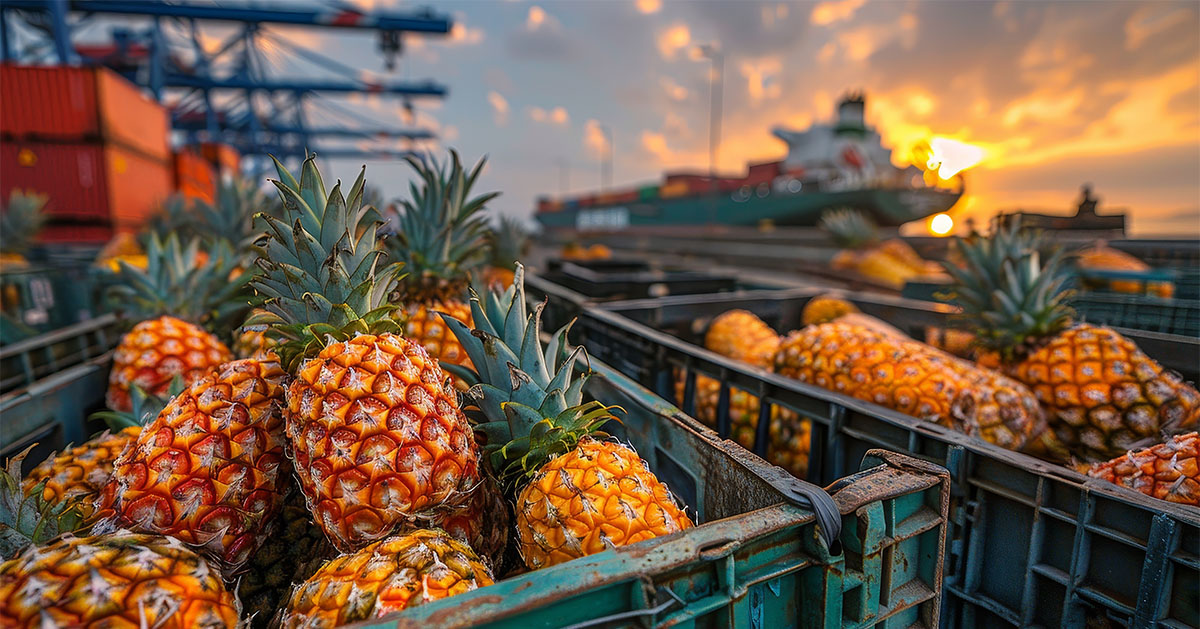
La gente compra una piña en la tienda por unos cuantos dólares y nunca lo piensa dos veces. Pero esa simple fruta tardó más o menos 14 meses para crecer—y un camión portacontenedores contiene alrededor de 16.000 de ellos. He estado de pie en esos campos mirando hileras y hileras de piñas que se extendían más allá de lo que podía ver, con remolques alineados a lo largo de los caminos de la jungla esperando para cargar. La complejidad logística que implica llevar esa fruta a las estanterías de Madrid o Chicago es asombrosa y, en gran medida, invisible para el consumidor final. Los márgenes son escasos como el papel. Un contenedor estropeado, robado o retrasado borra más de un año del trabajo de una persona. Cuando hablo con estos productores sobre la visibilidad en tiempo real, no necesito convencer a nadie.
Malvaviscos en México
Dulces de la Rosa, líder en el mercado de dulces y bocadillos de México, se robó una carga llena de malvaviscos. No es exactamente un atraco de gran valor. Sin embargo, el producto en sí no era la mayor preocupación. Era la idea de tener un inventario descontrolado flotando con su nombre, almacenado y manipulado en condiciones desconocidas. Los ladrones destruyeron el GPS principal, pensando que estaban a salvo. Pero no lo estaban. El rastreador Tive siguió transmitiendo y esos datos dieron a las autoridades todo lo que necesitaban para localizar el envío y recuperar hasta la última maleta. Definitivamente, no es fácil incluir eso en una plantilla de ROI estándar.
Envíos de carne en México
La carne es un objetivo masivo en todo México, y las cifras cuentan la historia con claridad. Solo las recuperaciones de los envíos de carne apoyadas por Tive han permitido ahorrar entre 15 y 16 millones de dólares en productos. Haz una pausa en eso por un segundo. No son accidentes raros. Esto es lo que hacen las empresas en las rutas que recorren cada semana. La visibilidad en tiempo real les da la oportunidad de recuperar el producto, en lugar de descartarlo por completo.
Cargas de cobre, acero e inoxidable
Uno pensaría que nadie podría robar de 40 a 60 toneladas de metal sin que alguien se diera cuenta. Te equivocarías. Las cargas pesadas desaparecen mucho más rápido de lo que la gente espera, y el tamaño no ofrece protección alguna. He hablado con empresas que asumían que el peso del envío por sí solo mantenía sus envíos seguros. No es así. La visibilidad en tiempo real cierra la brecha entre «creemos que está bien» y «sabemos exactamente dónde está». Cuando mueves materias primas por valor de cientos de miles de dólares, esa brecha lo llevará a la bancarrota.
Unidades de aire acondicionado
No todos los problemas se remontan al robo o las drogas. Un cliente que enviaba unidades de aire acondicionado tenía un problema completamente diferente: los golpes y las vibraciones durante el transporte. Los impactos hacían que los compresores dejaran de calibrarse antes de que las unidades llegaran al cliente, y era la propia carretera la que estaba causando los daños. Datos impactantes de Tive ayudó al equipo a identificar exactamente dónde se produjeron los problemas y a responsabilizar a los transportistas correctos.
LATAM está produciendo algunos de los casos de uso más creativos que he visto
Hasta ahora, he estado hablando de proteger la carga contra el robo, la contaminación y los daños. Pero quiero dar un giro a este punto porque algunas de las conversaciones más interesantes que estoy teniendo ahora mismo no tienen nada que ver con un contenedor en un camión. Las empresas de Latinoamérica se están volviendo tremendamente creativas con la tecnología de visibilidad en tiempo real. Honestamente, mucho de lo que veo intrigaría a los equipos de cualquier parte del mundo.
- Detección de heladas en huertos chilenos: Un socio en Chile comenzó a colocar los sensores Tive directamente en los huertos de frutas y verduras para rastrear la temperatura y la humedad en tiempo real, junto con la luz del amanecer y el atardecer. Cuando aumenta el riesgo de heladas, el equipo despliega helicópteros para llevar aire caliente a los campos y salvar la cosecha.
- Creación de almanaques estacionales a partir de datos de sensores: Todos esos datos de campo no desaparecen después de la cosecha. Durante varias temporadas, se acumula en un rico registro histórico de patrones de temperatura, humedad y luz. Los granjeros de la vieja escuela solían guardar los almanaques a mano. Estos equipos están construyendo las suyas con sensores activos.
- Optimización del tiempo de cosecha: Cuando puedes ver las condiciones microclimáticas de tus campos en tiempo real, dejas de adivinar cuándo recolectar. Los productores utilizan los datos para programar las cosechas para obtener la máxima calidad, lo que afecta directamente al precio que obtienen en el mercado. Mejor puntualidad, mejor fruta, mejores márgenes. Sencillo.
- Protección del rendimiento en la fuente: Aquí, la visibilidad en tiempo real comienza antes de que una sola cereza o piña abandone la granja. Detectar los problemas ambientales a nivel de campo significa menos pérdidas incluso antes de que la cadena de suministro entre en marcha. Eso por sí solo cambia la economía de todos los procesos posteriores.
- Hacer que las compañías de seguros se interesen: La mejora de los datos protege a los transportistas, y las aseguradoras lo han notado. Cuando puedes entregar a un proveedor un historial medioambiental completo de tu producto, desde el campo hasta la entrega final, la conversación sobre las primas y la cobertura empieza a ser muy diferente para ambas partes.
La próxima fase del crecimiento de LATAM pertenece a las empresas que pueden demostrar el éxito
Soy bastante optimista en cuanto a hacia dónde se dirige LATAM. Mercados como México, Colombia, Chile, Perú y Costa Rica ya tienen un fuerte impulso. Brasil está abierto de par en par. La demanda de visibilidad confiable en tiempo real está en un punto álgido, y por una buena razón.
Pero permítanme ser honesto: la adopción en LATAM no es automática. La sensibilidad a los precios es real. Las empresas han sido destruidas por imitaciones baratas y grandes promesas que han fracasado. El listón es más alto, y debería estarlo.
Por eso me encanta lo que hacemos en Cinco. Ayudamos a las empresas a supervisar la ubicación, la temperatura, la humedad, la luz, los golpes y el comportamiento de las rutas en tiempo real para que puedan proteger sus productos, reducir los riesgos y atender a sus clientes con confianza. Pero, ¿qué es lo que más me enorgullece? Nuestros clientes saben que los escuchamos. Nos presentamos. Nos quedamos.
LATAM está lista. Tive está listo. Empieza a usar Tive hoy.