

Tive Research: 45% of Companies Using Active Monitoring Recover More Than Half of Stolen Cargo, 1.5x the Rate of Those Relying on Passive Monitoring

September 29, 2026
2 min read
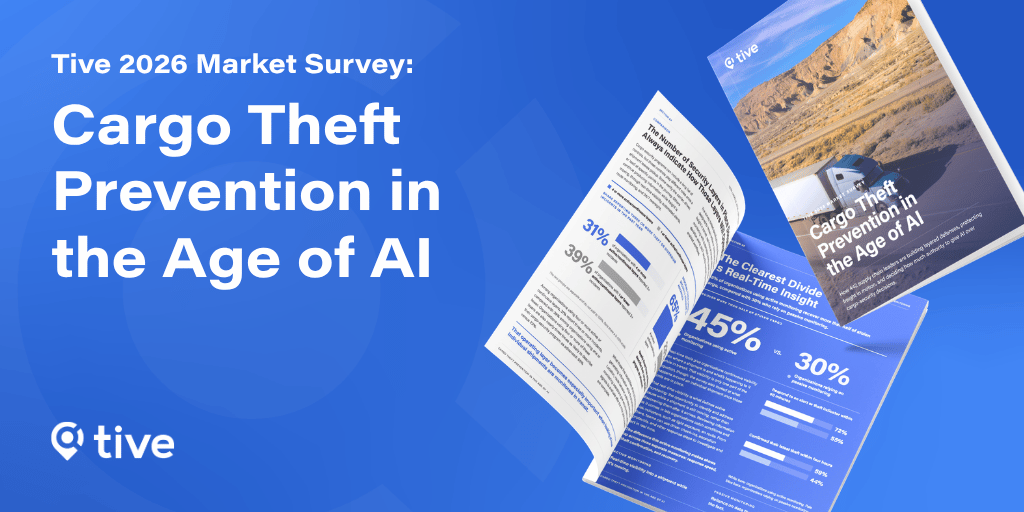
Survey of 442 supply chain leaders finds stronger response, theft-confirmation, and recovery outcomes among organizations using active monitoring, with route deviation showing the strongest recovery rate of any application tested
BOSTON, MA — September 29, 2026 — Tive, the global leader in real-time shipment visibility technology, today released new research, Cargo Theft Prevention in the Age of AI. The report examines which cargo-security practices are associated with stronger response, theft-confirmation, and recovery outcomes.
Tive surveyed 442 supply chain, transportation, operations, security, and executive leaders across North America, Europe, and Latin America and found the clearest differences in reported outcomes among organizations using active monitoring while freight is in transit. Forty-five percent of organizations using active monitoring report recovering more than half of stolen cargo, compared with 30% of organizations relying on passive monitoring. Organizations using active monitoring also report faster response and theft confirmation.
The findings come as companies are actively changing how they protect cargo. Seventy-eight percent changed their cargo-security approach in late 2025 or early 2026, while 83% now use AI in cargo security. Among organizations using AI-assisted tools, 80% report either clear, measurable improvement or promising early results.
“Cargo theft is becoming harder to catch at the point of pickup. A load can leave looking legitimate, and the first signs of a theft may come while the shipment is already on the move,” said Krenar Komoni, founder and CEO of Tive. “This research shows why in-transit monitoring and a layer-based approach to securing your cargo matters. The sophistication of bad actors has increased dramatically, and with AI it's becoming even harder to catch, whether at pickup or even while on the move with voice impersonations. Using our layered approach, Tive helps save customer shipments; this is becoming the standard way to ship and protect goods.”
Active monitoring means real-time visibility into a shipment while it’s moving, creating an opportunity to spot and address problems as they happen. In an active model, visibility into changes in route, like condition or other risk indicators such as light exposure, provide teams with information they can use to investigate and respond in real time. Seventy-two percent of organizations using active monitoring typically respond to an alert or theft indicator within 60 minutes, compared with 55% relying on passive monitoring. Fifty-nine percent confirmed their latest theft within four hours, compared with 44%.
The difference remains among companies already using AI. Within that group, 48% of organizations using active monitoring report recovering more than half of stolen cargo, compared with 31% relying on passive monitoring. Fifty-nine percent of organizations using active monitoring also confirmed their latest theft within four hours, compared with 42% relying on passive monitoring.
The survey also found a particularly strong recovery difference around real-time route deviation detection, the most commonly named AI-assisted cargo-security application. Fifty-three percent of organizations who use route deviation alerts report recovering more than half of stolen cargo, compared with 29% of organizations that do not use it, nearly 1.8 times the recovery rate. Among organizations already using active monitoring, the comparison increases to 60% versus 34%.
That capability becomes especially relevant when an illegitimate pickup initially appears legitimate. Fifty-five percent of respondents who could identify the primary method behind their latest theft cited identity-based fraud, spanning traditional identity and fictitious-pickup schemes as well as synthetic or AI-generated identities. Once freight leaves pickup, changes in its location, route, and condition can provide another source of information about whether the shipment is behaving as expected.
The financial exposure can also be significant. Nearly one-third of respondents estimate a single cargo-theft incident costs at least $100,000, 32% report at least $250,000 in annual cargo-theft impact, and 9% report $1 million or more.
As companies put more AI into cargo-security operations, they are also beginning to define how much authority they are willing to turn over to AI. Eighty-four percent of respondents would trust AI to perform at least one cargo-security function autonomously, without prior human approval. Three in 10 would allow AI to place a shipment on hold, escalate an alert to law enforcement, or do both. Only 16% say every AI alert or recommendation should require human review before anyone acts on it.
The full Tive 2026 market survey, Cargo Theft Prevention in the Age of AI, can be found at tive.com/2026-cargo-theft-survey. For more information about how Tive helps companies protect high-value freight in transit, visit Tive.com.
About Tive
Tive is the global leader in supply chain and logistics visibility technology. More than 1,400 global shippers, logistics service providers, and retailers use Tive to monitor shipment location and condition in real time, gain actionable insights, and ensure end-customer satisfaction. Tive’s cloud platform, patented sensor technology, and 24/7 Monitoring services reduce excursions and delays, minimize rejected loads, and decrease theft, damage, and spoilage. Customers count on Tive to ensure that shipments are delivered on time and in full, because every shipment matters. For more information, visit www.tive.com.
Press Contact for Tive:
Lane Kearney
Corporate Ink for Tive
tive@corporateink.com