The Inside Track: My Manifest 2026 Recap from the Booth, the Stage & the Show Floor

February 25, 2026
September 21, 2026
x min read
I spent most of my flight from Las Vegas back to the UK reflecting on what was, by any measure, an exceptionally full three days at Manifest 2026 in Las Vegas. Between Tive co-hosting the ION Visibility 4.0 track with Vizion, the panel discussions that followed, and countless conversations across the floor at The Venetian Expo, there was a great deal to absorb.
Now that I’ve had a moment to step back, one thing stands out clearly: there has been a seismic shift in tone across the industry.
Naturally, you’d expect the usual visibility talking points and well-worn buzzwords to dominate with over 8,000 supply chain and logistics leaders in the room. But this time around, they didn’t. Visibility has become the baseline, and many of the executives I spoke with have moved decisively beyond it.
Questions I heard were notably sharper and more outcome-focused: Where does intelligence meaningfully reduce operational friction? Which automation investments are delivering measurable impact? How do organizations accelerate without introducing new risk?
The themes reinforced one another repeatedly—across panel discussions and informal conversations—and they paint a clear picture of where the market is heading.
First: Tive on the Ground at Manifest 2026
Before diving into the broader themes emerging from the event, I’ll start with Tive’s role at the show. This year, Tive didn’t attend to simply increase brand visibility or collect leads. Tive showed up with a clear perspective on where the industry is headed, a thoughtfully curated track of programming, and an active role in some of the most substantive conversations shaping the future of supply chain and logistics.
Co-Hosting ION Visibility 4.0 with Vizion
Tive and Vizion co-hosted the 4th annual ION Workshop on kickoff day, a dedicated track of sessions addressing critical themes within today’s supply chain industry: agentic AI, real-time visibility, ground truth data reliability, and the practical challenges of turning logistics data into operational decisions, reflecting the reality many teams are navigating today. More than 1,600 attendees joined throughout the day. To me, that level of engagement signals something important: the appetite for practical, execution-focused dialogue is both real and growing. Attendees were not looking for theory. They wanted frameworks they could operationalize.
The AI Investment Panel That Set the Tone
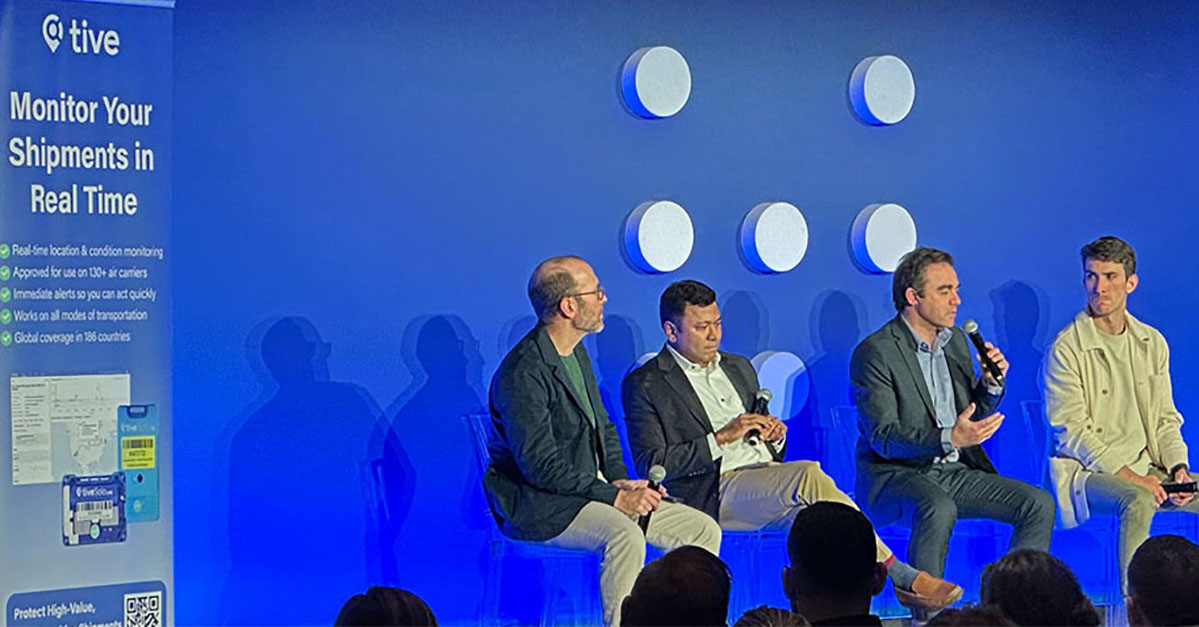
One session stood out early and carried momentum through the rest of the conference. “The AI Pivot: Where Supply Chain Leaders Are Actually Investing” featured Tive’s CEO, Krenar Komoni, alongside Mathew Elenjickal of FourKites and Pablo Palafox of HappyRobot, with moderator Eric Johnson of S&P Global. The conversation cut straight to the questions many organizations are currently grappling with: where should AI budgets be prioritized, and how should success be measured?
When The Expo Floor Opened, the Themes Intensified
Once the expo hall doors opened at The Venetian, the same themes from our kickoff day sessions spilled right onto the show floor. The talking points from the panels weren’t things people politely agreed with and then promptly forgot. They became the living, breathing conversations at booths, in hallways, and at coffee stands.
The Elusive Data Overload Problem
Not a single leader we spoke with at Manifest 2026 cited a lack of data as their primary concern. Quite the opposite. Teams are buried under alerts, notifications, and event streams, and the challenge has shifted to determining which of those signals require action.
In other words, detection technologies have improved markedly in recent years, but interpretation has not kept pace.
Organizations pulling ahead are no longer trying to capture everything. Instead, they are becoming far more disciplined about separating meaningful signals from background noise.
Without Context, Teams Chase False Alarms
That data overload challenge becomes even more pronounced when you layer in the physical reality of supply chains. Trucks reroute. Drivers take detours. Conditions on the ground evolve constantly.
Without sufficient context, many of these perfectly normal variations appear as potential issues, consuming valuable team time in unnecessary investigation.
Tive’s Smart Route Deviation Alerts surfaced repeatedly in conversations because they tackle that exact gap. By building dynamic expectations for how a shipment should move between origin and destination, the system highlights only the deviations that fall meaningfully outside probable behavior.
Routine variability is filtered out. Your team’s attention is directed where it matters most.
Automation is Only as Strong as Its Inputs
The context conversation naturally led to a broader point about automation—one that came up consistently.
You can build the most elegant AI workflows and orchestration layers imaginable, but if the signals feeding them are inconsistent or ambiguous, the whole thing crumbles.
Poor data quality doesn’t simply produce weak outputs. More critically, it erodes organizational trust and ultimately slows the very decisions automation is intended to accelerate.
Visibility Has Quietly Been Re-Defined
Taken together, these themes point to a fundamental evolution in expectations for real-time shipment visibility. Historically, the question was straightforward: Where is my shipment? Today, the requirement is far more demanding: produce data that AI systems, automation layers, and human operators can all act on with confidence.
Visibility platforms have quietly become the foundation on which everything else depends. At Manifest 2026, the contrast was clear: teams that have already embedded visibility into their core infrastructure demonstrated a markedly stronger strategic posture than those still approaching it primarily as a real-time tracking exercise.
The Bottleneck Few Expected
Perhaps the most revealing insight across the event was what leaders identified as their primary operational constraint. It wasn’t computing power or model sophistication. It was measurement fidelity, the quality and reliability of the signals feeding their decisions.
Time and time again, leaders told us they would choose fewer, higher-quality inputs over a high-volume stream of unreliable data. That mindset colored nearly every meaningful conversation we had at Manifest 2026, and it set the stage for where the industry is heading next.
What Manifest 2026 Signals About the Road Ahead
Every conversation Tive had at Manifest, whether on stage, at our booth, or grabbing lunch between sessions, circled back to the same fundamental question: how do you act faster and smarter when the world around your supply chain refuses to sit still?
The answers varied, but the direction was unanimous: visibility opened the door. But what matters now is what you build on top of visibility, including sharper interpretation, better prioritization, and execution frameworks that hold up when conditions inevitably become complex (as they often do).
This is precisely where Tive is focused. And it was encouraging to hear the industry increasingly validate what Tive has been building toward. We left Las Vegas with a full notebook, a long list of follow-ups, and even more conviction about where we’re taking things next.
Want to keep this conversation going? We’re all ears. Reach out anytime.