The Inside Track: What I’m Seeing Across The Food Cold Chain—Produce, Seafood, Meat & Beyond

April 13, 2026
September 21, 2026
x min read
Five days a week, sometimes six or even seven, I’m on the phone with people who move perishable food for a living. I run sales for Tive’s food and beverage vertical, so my world is produce, protein, seafood, dairy, supplements, CPG, you name it—flowing into grocery stores, foodservice, and quick service restaurants.
I hear what’s failing. I hear what’s barely holding together. I hear what nobody wants to say out loud on a conference panel.
Something has changed in the past year. The food cold chain has always been unforgiving, but the number of problems hitting shippers simultaneously right now is truly unprecedented. Compliance pressure, cargo theft, rising costs, and visibility gaps. And not one at a time: all at once.
What I’m sharing here comes from real conversations with real shippers.
Visibility Has Become More of a Priority
For years, most enterprise food shippers treated tracking like a checkbox. A customer required it, so they slapped a passive logger on the load and called it done. End of story.
That's not exactly what I'm hearing anymore.
At recent industry events, rooms full of large and midsized national food shippers kept circling back to the same problems: cargo theft, fraud, rejected loads, waste, and detentions from missed delivery windows and scheduled appointments. The energy behind these talking points felt urgent in a way I haven't seen before.
The reason is pretty obvious once you hear enough of these conversations. These companies move freight through massive, complex networks, and the tools they've relied on for years have blind spots in their cold chain visibility and monitoring that are starting to cost them.
What do I mean by that?
Knowing where a load is doesn't help when a reefer lost temp six hours ago and nobody caught it. Nor does location data alone tell you a trailer door opened in the middle of the night.
Shippers are hungry for real-time pallet-level data—condition-level detail, temperature alerts, light alerts, and real information they can act on before a product is compromised, not after. The food cold chain has always punished slow reactions: what's changed is that shippers are making these investments on their own terms now, not because a customer forced their hand.
Cargo Theft Went From Background Noise to Boardroom Priority
Of all the problems I hear about, cargo theft comes up the loudest and most often. Some of the most eye-opening conversations I’ve had lately involve products that wouldn’t have topped anyone’s theft list a few years ago.
Protein has always been a target. Beef, pork, chicken, and lamb move in high volume, carry serious value, and historically traveled without much real-time shipment visibility. Thieves know that. The meat sector caught on fast and started adopting real-time tracking and route deviation tools earlier than most.
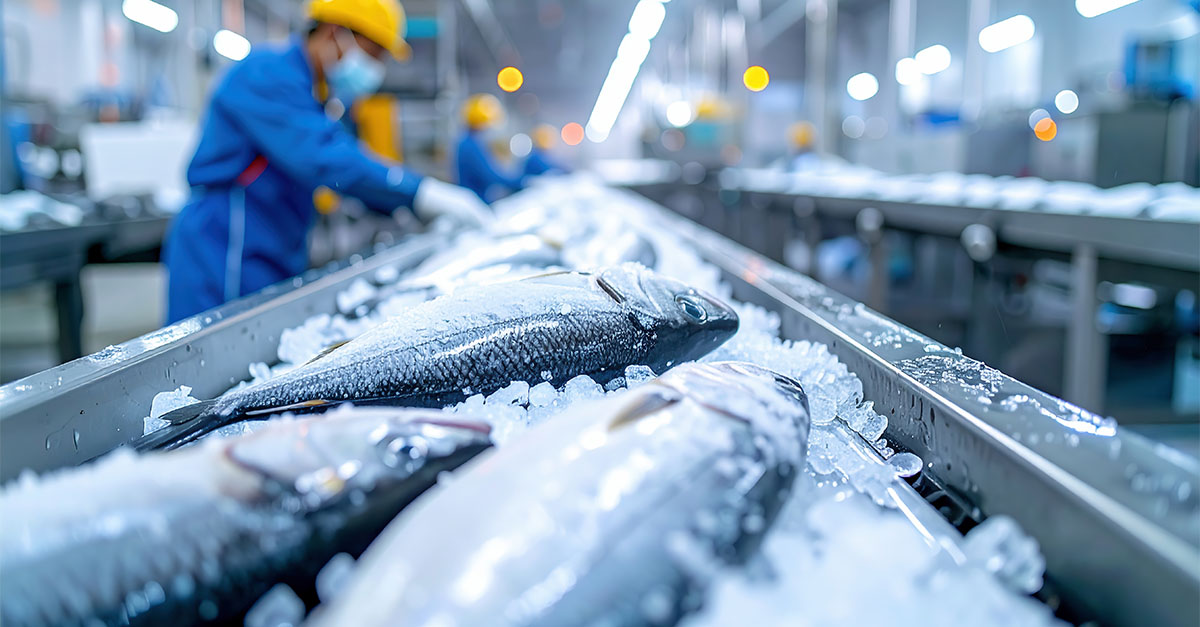
Seafood is the one that surprises people. After $400,000 worth of lobster, oyster, and crabmeat disappeared in New England in late 2025, that changed quickly. Premium frozen products are expensive, easy to resell, and can move easily through secondary markets. Stolen goods can end up back in the same food cold chain, and the end buyer may never know the difference.
From “What Happened” to “What’s Happening Right Now”
Theft gets headlines, but there’s a quieter problem costing shippers just as much. Most of the food cold chain still runs on passive monitoring. Downloadable logs. Temperature loggers you pull after delivery. That's why temperature loggers are essential for retailers who need proof of compliance. Data you can only look at once it's too late to do anything about it.
Produce is probably the strongest example. Retailers have required passive devices on produce loads for years, so the technology is familiar. But those tools give suppliers a record, not a warning. Seafood is similar: the category has been comfortable with passive temp logging for a long time, but tighter on-time-in-full expectations and vendor scorecards are forcing the conversation forward.
The pattern I keep seeing across categories is the same. Passive devices can prove what happened. And while that still serves a purpose, real-time visibility tools give you what you need to still change what happens or what will happen.
That distinction’s worth quite a lot when you’re trying to save a load instead of documenting a loss.
Produce Can’t Afford to Lose What It Can’t See
The real-time conversation hits hardest in produce because of the economics. Farm costs keep climbing, agricultural inputs are more expensive, and consolidation is squeezing smaller operations out. The apple market is a good example—it's seen serious pressure from closures over the past few years, and when margins are already that tight, a single rejected load or undetected temp excursion can be the difference between a profitable season and a losing one.
When your margins are already that thin, a temperature problem that goes unnoticed for a few hours can do real damage. Shrink. Spoilage. A rejected load. A customer who stops returning calls. Produce shippers have always lived with that risk, but the financial cushion that used to absorb those hits has mostly disappeared. Protecting the food cold chain from avoidable waste stopped being optional and became a survival question.
I’m seeing the same urgency build in adjacent categories, too. Floral and frozen have both picked up momentum recently, and for the same basic reason. When the product is perishable, and the margins are tight, you need to know what’s happening before it’s too late to act.
Customers Are Done Asking Nicely for Better Data
All of that margin pressure and waste reduction talk leads somewhere very concrete. Customers are tightening inbound compliance requirements, and they’re backing them with penalties.
Kroger gave the food cold chain a preview of where things are headed. Through its One Network program, Kroger required suppliers to feed real-time location and temperature data into their system on a 15-minute cadence. Miss the window, or not be connected. Simple as that. It’s not like the operational lift was small, either. Suppliers needed IT resources, integration readiness, and the ability to share data consistently with a major trading partner.
I talk to suppliers who treated that as a wake-up call, and I think they’re right. Kroger won’t be the last retailer to make these demands. The expectation that suppliers can provide continuous, real-time shipment data is spreading, and the companies that build that capability now won’t be caught flat-footed when the next mandate drops.
The Next Question: What Do You Do With All That Data?
Once companies start collecting real-time information across their food cold chain, the obvious follow-up lands fast. We now have ground-truth data. How do we use it better?
I’ve been hearing that question a lot at food safety and quality events lately. The excitement isn’t about data collection anymore. It’s about layering AI and machine learning on top of it to automate the tedious stuff. Which shipments need attention first? Which failure patterns keep repeating and should trigger automatic escalation? Where are teams spending hours on manual monitoring when they could focus on exceptions only?
The opportunity here is practical, not futuristic. Cold chain safety and quality teams sitting on rich, real-time datasets can triage faster, catch recurring problems earlier, and spend their time on decisions that matter instead of staring at dashboards. The companies I talk to are already asking how to get there.
Volatility Is the New Normal & Shippers Are Building Around It
None of these trends exists in a vacuum: theft, compliance, waste, and the move to real-time. They’re all happening against a backdrop that hasn’t settled down since COVID in 2020, and honestly shows no sign of settling down anytime soon. The food cold chain keeps getting harder to operate in, and the shippers I talk to have stopped pretending otherwise.
You Don’t Have to Ship Internationally to Get Hit by International Problems
I talk to companies that never ship a single container overseas, and they still feel the impact of global events and risks through their fuel costs alone. Something flares up on the other side of the world, and freight budgets take a hit within days. Most of the shippers I work with have given up on waiting for calm. They budget for chaos now.
Regulations Keep Moving Whether You’re Ready or Not
The regulatory side is tightening too. FSMA 204, the FDA’s Food Traceability Rule, requires companies handling high-risk foods like produce, seafood, eggs, and cheeses to track and share detailed supply chain data at every point from farm to retail. The original compliance deadline was January 2026. FDA pushed it to July 2028 after it became clear that building end-to-end traceability across thousands of supply chain partners wasn’t happening overnight. However, the requirements haven’t changed. Shippers who treat the extra time as a reason to wait are going to find themselves right back where they started, only with less runway. Real-time visibility is the infrastructure that makes compliance possible.
Everybody’s Spreading Their Bets
The response I keep seeing is diversification. Food companies are spreading out. Frozen seafood is getting real investment alongside fresh seafood. Floral is showing up in my pipeline in ways it never did two years ago. Export shipments that used to move with zero visibility are finally on someone’s priority list. Too many companies learned the hard way what happens when one disruption takes out your only plan.
Shippers Started Using Visibility to Win Business
The thing nobody predicted is how visibility became a customer-facing tool. It started as risk protection. Now I watch suppliers pull up real-time data on calls with buyers to prove service levels, get ahead of problems before the complaint comes in, and back up their promises with something concrete. That part of the food cold chain conversation barely existed three years ago.
Where the Food Cold Chain Goes From Here
I’ve had hundreds of these conversations over the past several months, and the pattern is impossible to miss. Protein shippers worried about organized theft rings. Produce suppliers watching margins evaporate. Seafood companies rethinking passive monitoring after a six-figure loss. Retailers demanding real-time data on a 15-minute cadence. Every category, every lane, every conference room I walk into, the pressure is coming from a different direction—but it’s landing in the same place. Reacting after delivery doesn’t work anymore.
Tive exists for exactly this moment. We give food and perishables shippers a cold chain monitoring platform with live temperature alerts, light alerts, route visibility, and the ability to share real-time data with the trading partners who need it. When a reefer has a temperature excursion, your team knows about it while there’s still time to save the load. When a trailer deviates from its route, you see it happen instead of reading about it in a claim report. That’s the difference between managing your freight and just hoping it shows up intact.
If any of what I’ve described here sounds familiar, get started with Tive today.