

What Is Real-Time Temperature Monitoring? Definition, Benefits, and How It Works

July 27, 2026
September 21, 2026
x min read
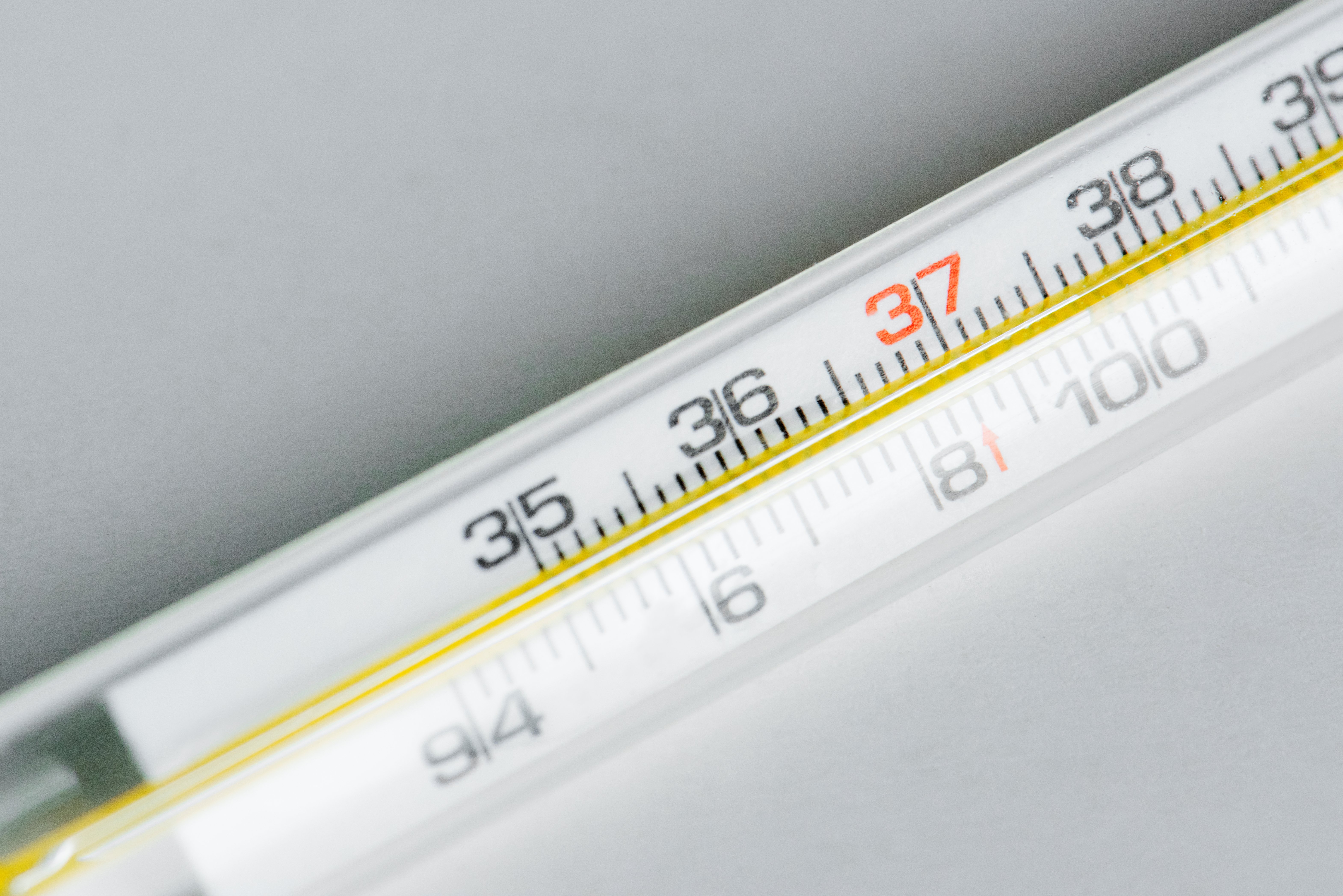
TL;DR: Real-time temperature monitoring uses cellular-connected sensors to transmit continuous condition data during transit, replacing post-delivery data downloads with in-transit alerts you can act on before a load is lost. Unlike passive USB loggers that reveal excursions only at the receiving dock, cellular trackers give quality leaders the data to intervene mid-shipment, support Mean Kinetic Temperature (MKT) safe release decisions, and generate an unbroken chain-of-custody record across every carrier handoff. For high-value, regulated, or multimodal lanes, this shift from reactive documentation to active monitoring is the difference between catching a product loss before it happens and filing a deviation report after the fact.
Passive Universal Serial Bus (USB) data loggers turn temperature monitoring into an autopsy. A passive USB data logger travels with your pharmaceutical shipment, records ambient temperature at set intervals, and waits to be downloaded at delivery. When an excursion surfaces, the product is rejected, the investigation window has opened, and corrective and preventive action (CAPA) documentation starts from incomplete, reconstructed records. Real-time temperature monitoring changes this dynamic entirely. Tive's cold chain monitoring platform automates this shift from post-delivery downloads to in-transit alerts.
By combining cellular connectivity with precision sensors, real-time trackers transmit continuous location and condition data during transit, creating the intervention window that passive loggers cannot provide. This article defines real-time temperature monitoring in precise technical terms, explains the cellular workflow that makes it work, contrasts it against traditional approaches, and maps continuous data to the regulatory requirements that drive audit-ready compliance documentation.
Defining Real-Time Temperature Monitoring and Cold Chain Integrity
Real-time temperature monitoring captures, transmits, and analyzes temperature data from a shipment continuously during transit, with sufficiently low latency that quality teams can detect a threshold breach and respond before the shipment reaches its destination. In the broader data field, real-time systems collect and surface data with minimal delay between event and insight. TechTarget defines real-time monitoring as the delivery of continuously updated data with minimal delay between collection and analysis. Applied to cold chain logistics, that means a temperature breach on a pharmaceutical lane triggers an alert while the shipment is still in motion, not after it arrives at the dock.
Cold chain monitoring refers to the broader practice of maintaining and verifying the integrity of temperature-controlled supply chains from origin to destination. This encompasses storage environments, loading and unloading practices, carrier transit conditions, and every carrier handoff along a multimodal journey. A cold chain is only as strong as its weakest link, as Tive's visibility gap analysis illustrates, and the most common failure point is the in-transit window where passive loggers cannot generate an alert.
The distinction matters operationally. A passive USB data logger documents the cold chain. A cellular real-time tracker protects it. Passive documentation tells you a product experienced a six-hour excursion somewhere between the freight forwarder's facility and the receiving dock. Real-time monitoring tells you the excursion began three hours ago, at which carrier handoff, and at what temperature, while you still have time to act.
How Real-Time Cellular Temperature Sensors Work: A 4-Stage Technical Workflow
Understanding the mechanics of cellular temperature monitoring helps quality leaders evaluate trackers accurately and design monitoring programs that hold up under regulatory scrutiny.
Each stage in the workflow builds on the last, moving from initial sensor detection through calibration, independent cellular transmission, and cloud-based alert generation.
Stage 1: Detection via Thermistors and Resistance Temperature Detectors
High-accuracy temperature sensors at the heart of every real-time tracker measure ambient temperature by detecting changes in electrical resistance. Resistance Temperature Detectors (RTDs) work on the principle that electrical resistance in pure metals changes predictably as temperature rises. Platinum Pt100 sensors, with a nominal resistance of 100 ohms at 0°C, are the established industry standard for precision temperature measurement in pharmaceutical and food applications. Thermistors achieve similar results across narrower temperature ranges, with changes measured in tens of ohms per degree, while RTDs change by smaller increments that deliver superior linearity for the extended ranges pharmaceutical cold chains require.
Every Tive Solo Pro, Tive Solo 5G, and Tive Solo Lite is built with National Institute of Standards and Technology (NIST)-traceable temperature sensors accurate to ±0.5°C. The Solo Pro and Solo 5G combine GPS, cellular, and WiFi geolocation; the Solo Lite uses cellular and WiFi geolocation only. The Solo Pro adds a drift specification of less than 0.01°C per year for life sciences shipments where cumulative sensor error is a validation concern.
Stage 2: Signal Conversion and Calibration
The analog resistance reading from the sensor converts to a digital data point through an Analog-to-Digital Converter (ADC) within the tracker's microcontroller. The onboard processor maps this reading against a calibration curve to produce an accurate temperature value. This is where sensor calibration becomes critical for regulatory defensibility. Tive includes a 3-Point NIST traceable Certificate of Calibration with every tracker, validating accuracy at three points across the operating range rather than a single midpoint. A 3-point check provides documented proof of accuracy across the full operating range rather than at a single midpoint, which is the level of calibration evidence pharmaceutical and food auditors expect. Pharmaceutical and food auditors routinely ask for this level of documented proof during quality program reviews.
Stage 3: Independent Cellular Transmission vs. Gateway-Dependent Sensors
This is where real-time cellular trackers separate from alternatives like Bluetooth Low Energy (BLE) or WiFi sensors. Gateway-dependent sensors, including Bluetooth Low Energy (BLE) devices, broadcast data over short ranges and require a local hub to relay it upstream. That dependency works inside a fixed facility with known infrastructure. On a moving shipment, no gateway travels with the cargo, and data stays on the device until it reaches a gateway range.
Tive multi-network trackers bypass this constraint by connecting directly to global cellular networks, pushing condition data to the cloud without any local infrastructure required. Tive multi-network trackers operate across 186 countries, combining GPS, cellular, and WiFi geolocation to maintain connectivity across the multimodal journeys where gateway-dependent sensors create blind spots. When a tracker loses signal during an ocean crossing or in a remote area, it keeps measuring locally on its preconfigured transmission schedule and backfills the complete condition history the moment connectivity restores, producing an unbroken data record.
Tive's patented bi-directional connectivity adds a further capability: you can adjust tracker settings, including measurement and transmission intervals, while shipments are in motion, without physical access to the device.
Stage 4: Cloud-Based Data Management and In-Transit Alerts
Once data reaches the Tive Platform, the alert engine compares incoming readings against the thresholds you configured per shipment leg. When a temperature excursion occurs, Tive sends notifications via email, push alert, and text message so quality teams and logistics staff can respond while the shipment is still in transit. As Lab Design Newsnotes, cloud storage is not inherently a Food and Drug Administration (FDA) 21 Code of Federal Regulations (CFR) Part 11 compliance barrier, provided the platform has been independently validated for its intended use and the vendor supplies qualification and change-control documentation, including secure user authentication, role-based access controls, time-stamped audit trails, and tamper-evident encrypted storage. Buyers should confirm how these credentials apply to their specific validation program directly with Tive.
Real-Time Cellular Trackers vs. Traditional Temperature Monitoring Technologies
Quality leaders evaluating monitoring approaches typically compare three technology categories, each with distinct connectivity models, data access windows, and compliance implications.
The cost comparison between passive loggers and cellular trackers is frequently cited as a barrier, and it deserves a direct answer. On a high-value pharmaceutical lane where a single rejected shipment can cost between $150,000 and $750,000, the monitoring cost is not the material risk. The absence of monitoring is. The Tive ROI Calculator lets you model this trade-off against your actual lane values and excursion rates.
Tive's comparison of real-time vs. passive approaches addresses the practical dividing line clearly: passive loggers serve a legitimate role on low-risk, short-haul lanes where post-delivery compliance documentation is the only requirement. The decision point is whether a single excursion on that lane would trigger a rejected load, a CAPA investigation, or a regulatory audit. If yes, the intervention window that only real-time monitoring provides is not optional.
One G2 reviewer who switched from separate temperature loggers to Tive described the practical impact:
"It was an easy product to implement commercially and at a good price point. Lots of features and in some cases has allowed us to stop using seperate temperature loggers." - Dan H. on G2
Software-only real-time transportation visibility platforms aggregate carrier-reported data but cannot measure what is physically happening inside the shipment. Temperature deviation, humidity, and shock require a physical sensor traveling with the cargo. This is the fundamental difference between carrier milestone data and ground-truth condition data, and it is why hardware-inclusive monitoring platforms address a distinct and more demanding compliance requirement.
The Operational and Compliance Benefits of Continuous Condition Monitoring
Three areas carry the most operational weight for quality leaders managing regulated, multimodal, or high-value lanes.
Closing the Carrier Handoff Blind Spot on Multimodal Lanes
The most common cold chain failure point is the multimodal journey where a pharmaceutical shipment moves from air to ground, changes hands between carriers, and passes through a third-party warehouse before reaching the receiving dock. At each handoff, carrier-reported milestones stop updating, and passive loggers continue recording without transmitting.
Tive multi-network trackers travel with the cargo across all legs, closing this gap. The condition record does not restart at each handoff. It continues, unbroken, generating the continuous chain-of-custody documentation that regulatory auditors require. Tive's cold chain visibility overview frames this as the core operational differentiator: real-time multi-network trackers replace post-mortem data downloads with continuous, in-transit condition monitoring that persists across carrier transitions.
Simplifying CAPA Workflows with Mean Kinetic Temperature and Cumulative Exposure
When a temperature excursion occurs during transit, the quality question is not only whether the threshold was breached, but whether product integrity was actually compromised. Mean Kinetic Temperature (MKT) is the calculated temperature that represents the equivalent thermal effect of temperature variations over time, weighted by the Arrhenius equation to place greater emphasis on higher-temperature exposure. As defined in USP (United States Pharmacopeia) General Chapter <1079.2>, MKT is the single calculated temperature at which the total amount of degradation over a period equals the sum of individual degradations that would occur at various temperatures. It is not a simple arithmetic mean. Critically, long temperature excursions at slightly elevated temperatures can be just as impactful as short excursions at significantly elevated temperatures, which means MKT gives quality teams a scientifically defensible basis for assessing whether a threshold breach has actually compromised product integrity.
In practical terms, MKT allows your quality team to distinguish a brief spike a product can withstand from sustained elevated exposure that triggers degradation. A real-time tracker recording continuous data generates MKT and cumulative exposure calculations automatically, giving you the scientific basis for a defensible safe release decision at the dock without reconstructing a data record from partial downloads. This is why critical temperature monitoring matters most on regulated pharmaceutical lanes.
The Solo Pro is the only tracker in the Tive lineup with a built-in 2.66-inch ePaper display showing current temperature, alarm status, and MKT, so receiving staff can make an immediate accept/reject determination without additional equipment or a platform login.
Securing Audit-Ready Chain-of-Custody Documentation for Global Regulatory Frameworks
Continuous condition monitoring generates the specific documentation that global regulatory frameworks mandate.
FDA 21 CFR Part 11 (Pharmaceuticals, Life Sciences): 21 CFR Part 11 establishes criteria for electronic records and electronic signatures to be considered trustworthy and equivalent to paper records with handwritten signatures. For pharmaceutical temperature monitoring, this means records must include complete audit trails with tamper-proof timestamps and validated system accuracy. Automated, continuous data collection removes human entry from record creation, generating time-stamped entries that cannot be altered after the fact.
European Union (EU) Annex 11 (Pharmaceuticals, Europe, the Middle East, and Africa (EMEA)): The European equivalent to 21 CFR Part 11, EU Annex 11 sets requirements for computerized systems in pharmaceutical environments that parallel the FDA framework. A tracker operating on a Europe-bound lane generates the same unbroken condition record that satisfies both frameworks.
FSMA (Food Safety, North America (NAMER)): The Food Safety Modernization Act (FSMA) requires food shippers to maintain electronic temperature records accessible to the FDA within 24 hours of a request.
Tive holds FDA 21 CFR Part 11, EU Annex 11, FSMA compliance, and Good Manufacturing Practice (GMP)/Good Automated Manufacturing Practice (GAMP) 5 compliant design. Tive includes a 3-Point NIST traceable Certificate of Calibration with every tracker. Buyers with specific validation program requirements should confirm how those credentials apply to their program directly with Tive.
Real-World Proof: How Quality Leaders Catch Product Loss Before It Happens
Tive research reinforces the industry shift underway. In the BioPharma Dive supply chain security survey (December 2024), real-time tracking and condition monitoring were identified as central to protecting cold chain integrity, with rising concern over the difficulty of sharing trustworthy, digitized condition data across systems. In the "Beyond Visibility" survey of 300+ pharma leaders, digitizing and sharing trustworthy data across systems ranked among the top supply chain challenges, confirming that the compliance documentation gap is an industry-wide problem, not a single organization's process failure.
Market adoption data reflects the same shift. According to Berg Insight's Cold Chain Tracking and Monitoring Market Report, shipments of remote tracking systems with cellular or satellite connectivity for refrigerated cargo reached 765,000 units worldwide in 2023 and are projected to reach close to 1.2 million units in 2028, growing at a compound annual growth rate (CAGR) of 8.7%. Over the same period, the installed base of active remote tracking systems for refrigerated cargo is forecast to grow from 2.7 million units to 4.5 million units, a CAGR of 10.8%, reflecting the accelerating shift away from passive logging.
The proof from actual shipment outcomes is specific. Alpine Fresh used Tive in-transit condition alerts to act on a temperature excursion while a blueberry shipment was still in transit, saving a load valued at $120,000. A separate excursion alert on an asparagus shipment enabled similar intervention, saving a $90,000 load. In both cases, the intervention window existed because alerts fired during transit, before the product reached the dock. A passive data logger on either shipment would have revealed the excursion after delivery, at which point the investigation would have replaced the load recovery.
E.T.H. Cargo, a Puerto Rico-based third-party logistics (3PL) provider running 200+ pharmaceutical shipments per year across air, ocean, and multimodal routes, provides a precise example of how ground-truth condition data changes the compliance outcome. When a damage claim arrived on a shipment that had exceeded its validated five-day transit window, live data from Tive Solo 5G trackers showed the shipment had maintained -19.67°C throughout the journey, still within the required temperature range. That single data point disproved the claim and avoided a costly investigation. In a separate incident, five trackers reporting identical out-of-range temperatures confirmed a cooling failure that a ground handler had denied. As E.T.H. Cargo President Sascha Herzig put it:
"Once you have live monitoring, you can't go back." - E.T.H. Cargo customer story
Transitioning to Real-Time Visibility: Selecting the Right Monitoring Strategy
Selecting the right hardware starts with matching the tracker's sensor suite and connectivity model to the risk profile, regulatory requirements, and shipment characteristics of each lane. For a deeper breakdown of when to choose real-time temperature monitoring versus passive logging, see Tive's lane-by-lane guide.
- Pharma and life sciences cold chains: Tive purpose-built the Solo Pro for regulated pharmaceutical shipments. It carries the full sensor suite (temperature, humidity, light, shock, tilt, and motion), extends the temperature range to -30°C to 60°C with cryogenic probe support to -200°C and dry-ice probe support to -100°C, and is the only tracker with a built-in ePaper display showing temperature, alarm status, and MKT for immediate dock decisions.
- High-value multimodal shipments: The Solo 5G includes humidity and shock (up to 12G) sensors, delivers GPS accuracy to 20 meters, operates from -20°C to 60°C with probe extensions below that range, and combines GPS, cellular, and WiFi geolocation for the highest location accuracy in the Tive lineup.
- Cost-aware food and beverage lanes: The Solo Lite records temperature, light, and motion with location via cellular and WiFi across all modes, delivering real-time in-transit condition data at a lower per-shipment cost for lanes where humidity and shock monitoring are not required.
- Near Field Communication (NFC) audit trails and last-mile verification: The Tive Tag is a paper-thin NFC label logger starting at $5 per tag. It records temperature throughout transit and delivers an instant pass/fail result when tapped with an NFC smartphone at receipt, syncing to the Tive cloud for audit documentation. It is not a real-time tracker and does not transmit during transit, but it provides a low-cost compliance record for lower-risk lanes or as a supplement alongside a Solo tracker.
The Case for Acting Before Delivery
Passive temperature logging documents what happened. Real-time cellular monitoring creates the window to change what happens. For quality leaders managing pharmaceutical, perishable, or high-value lanes, the practical difference comes down to one question: when your next temperature excursion occurs, do you want to read about it in a post-delivery download or respond to it while the shipment is still in motion?
Continuous, in-transit condition monitoring from a cellular tracker that travels with the cargo across every carrier handoff, generates MKT calculations automatically, and produces an unbroken audit-ready record is not a premium add-on for complex lanes. It is the baseline that GDP, GMP, and FSMA documentation requirements increasingly demand, and that auditors are trained to look for when passive records leave gaps.
The place to start is your highest-risk lane, the one where a single rejected load would exceed the cost of a full year of monitoring. Talk to Tive's team about monitoring that lane, or run the numbers first with the Tive ROI Calculator.
FAQs
What is the difference between real-time and near real-time temperature monitoring?
The operational difference is when the data reaches your quality team relative to the shipment's position in transit. Real-time cellular trackers transmit condition data continuously during transit, so a threshold breach triggers an alert while the shipment can still be rerouted or recovered. Near real-time systems accumulate readings and transmit periodically rather than continuously, which supports post-delivery review but creates a response gap on regulated pharmaceutical or perishable lanes where the intervention window closes before the data arrives.
How does a cellular temperature tracker maintain data continuity through connectivity gaps?
Tive multi-network trackers measure and store data on a preconfigured transmission schedule independent of cellular transmission. When a tracker loses signal during ocean transit or in a remote area, it keeps recording locally and backfills the complete condition history to the Platform the moment connectivity restores, producing an unbroken data record with no gaps.
What does NIST traceable calibration mean for temperature monitoring accuracy?
A 3-Point NIST traceable Certificate of Calibration confirms that a tracker's readings have been validated against NIST-maintained standards at high, middle, and low temperature checkpoints. Tive includes this certificate with every tracker, providing the documented accuracy proof that pharmaceutical and food auditors require when reviewing monitoring program instrumentation.
Key Terms Glossary
Temperature excursion: A deviation from the defined temperature range specified for a product during storage or transit, requiring a documented investigation and CAPA response.
Mean Kinetic Temperature (MKT): A calculated, weighted-average temperature that accounts for the accelerated degradation effect of higher temperatures, used to assess whether a brief excursion has compromised product integrity and to support defensible safe release decisions.
CAPA (Corrective and Preventive Action): A quality system process that documents the investigation of a non-conformance, its root cause, and the corrective steps taken to prevent recurrence, required by GMP and GDP frameworks.
Chain-of-custody documentation: The continuous, auditable record of who had physical or custodial control of a shipment at every point in its journey, including all carrier handoffs, required for regulatory compliance and dispute resolution.


